Recycled Black Masterbatch: Recycled Carriers, Recovered Carbon Black and What to Check
What This Article Covers
This guide is about masterbatch that itself contains recycled material. Coloring recycled resin with black masterbatch is a different question, covered in how to choose black masterbatch for recycled plastics.
Three Meanings of "Recycled"
| Type | What is recycled | Main technical point | Main benefit |
|---|---|---|---|
| Recycled carrier | The carrier resin (e.g. rPE) | Carrier lots vary more than virgin resin | Recycled content in the bulk of the pellet |
| Recovered carbon black (rCB) | The pigment, usually from tire pyrolysis | Higher ash and more variable surface than virgin carbon black | Recycled content in the pigment |
| Both | Carrier and pigment | Both sources of variation combined | Highest recycled share |
When a supplier says "recycled", ask which of these applies, what share of the masterbatch is recycled, and whether the recycled material is pre-consumer or post-consumer.
Recycled Carriers
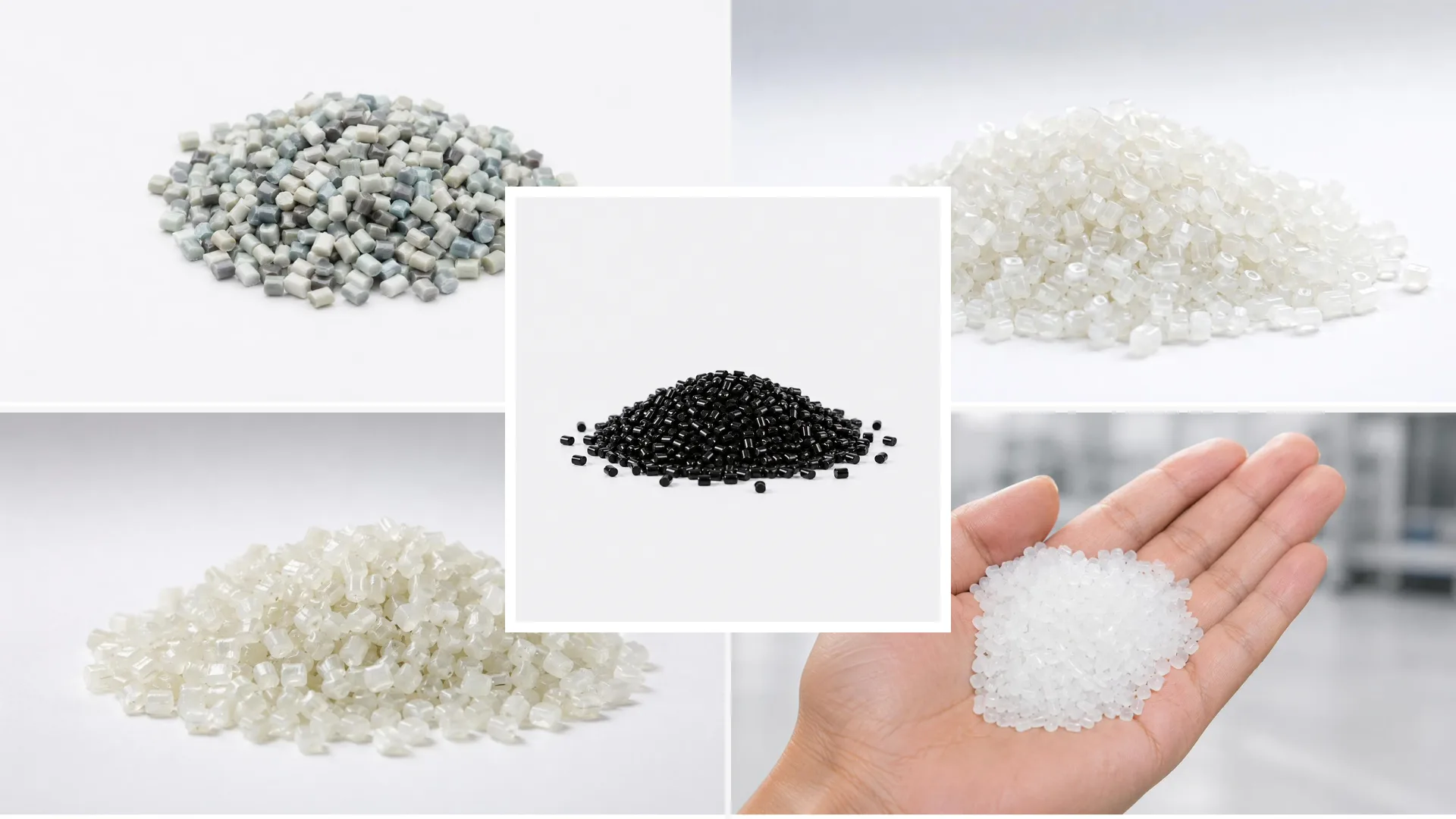
A recycled carrier replaces virgin polymer with post-industrial or post-consumer resin. Black hides the slight color variation that recycled resin often carries, which makes black masterbatch a practical place to use it. The points to check are the ones that vary in recycled resin: melt flow, gels and contamination, odor and moisture. A supplier should control incoming recycled resin and be able to show that output properties stay within the grade specification.
Recovered Carbon Black (rCB)
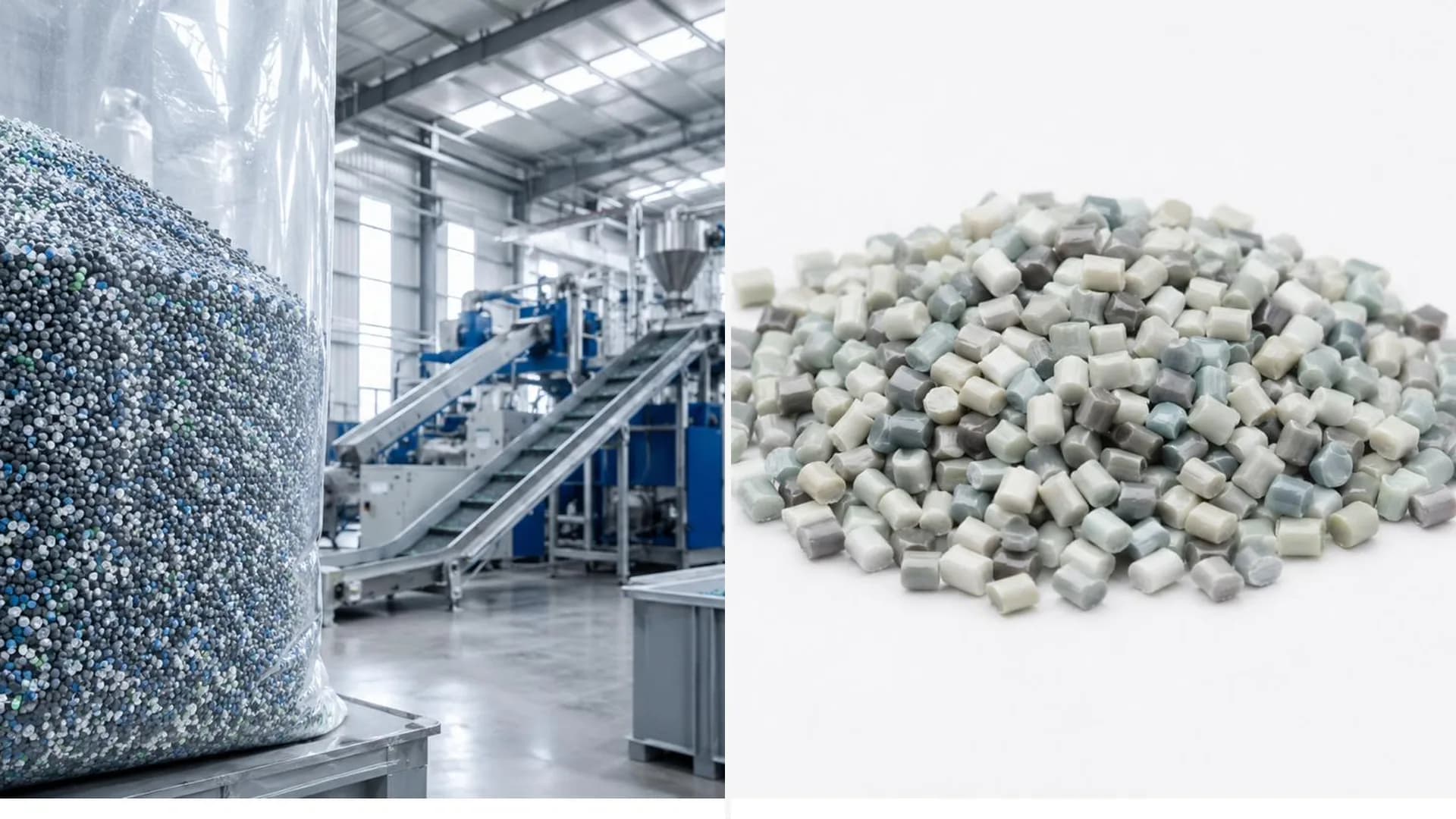
Recovered carbon black is the solid left after the organic part of end-of-life tires has been removed by pyrolysis. It contains the carbon blacks originally used in the tires, mixed with inorganic compounding ingredients such as zinc compounds and silica, so its ash content is much higher than that of virgin furnace black. ASTM has dedicated methods for recovered carbon black, including ASTM D8621 for ash content. For masterbatch, the higher and more variable ash and residue matter because they can affect dispersion, filtration, jetness and lot-to-lot consistency. Many rCB-containing products therefore combine recovered and virgin carbon black.
How Recycled Grades Compare with Virgin Grades
| Property | Virgin grade | Recycled-content grade | What to check |
|---|---|---|---|
| Dispersion and specks | Set by the grade | Can match a virgin grade if raw materials and process are controlled; can be worse | Film or filter test, specks on your product |
| Jetness | Set by the carbon black | rCB usually gives less depth of black than fine pigment blacks | Comparison with your reference |
| Lot consistency | High with good process control | Depends on feedstock control | COAs and a second-lot comparison |
| Odor | Low with suitable carriers | Can be higher with some recycled carriers | Odor assessment if your product needs it |
| Footprint | Baseline | Can be lower, but only shown by an assessment | A documented basis for any claim |
These are general tendencies, not results for a particular grade.
Where Recycled-Content Grades Fit
They are easiest to adopt where black and opacity matter more than a perfect surface: refuse and courier bags, construction film, non-visible molded parts, some non-pressure pipe and profile. They need more care in thin high-performance film, high-gloss visible parts, pressure pipe and regulated uses such as food contact, where the recycled source and documentation must meet the specific requirements.
Recycled-Content and Footprint Claims
Claims such as a recycled-content percentage or a lower carbon footprint should be backed by evidence for the specific product. ISO 14021 sets principles for self-declared environmental claims, including how recycled content is defined. A recycled-content percentage refers to the masterbatch; the share in your finished product is much smaller, because the masterbatch is added at a few percent. A footprint claim needs a life cycle assessment or another documented basis.
Switching to a Recycled Grade
- Decide which recycled type you want and why: recycled content, cost or both.
- Ask for the recycled share, its source and the documentation behind any claim.
- Trial the grade against your current grade at the same carbon black content in the part.
- Check specks, jetness, screen pressure, odor and the properties your product needs.
- Compare a second production lot before approving the grade for routine use.
Frequently Asked Questions
Does recycled black masterbatch perform as well as virgin?
In many uses it can be close, but it depends on raw material control and process. Treat performance as something to confirm in a trial, not to assume.
Can recycled black masterbatch be used in food-contact packaging?
Not on the basis of the recycled PE alone. The source of the recycled material, contamination control, the recycling process and the regulations of the intended market each need their own assessment, and the status of a recycled carrier and of recovered carbon black cannot be inferred from each other. Such a project needs a dedicated material and regulatory review for the specific grade and use; ZFH does not claim food-contact compliance for recycled grades without grade-specific evidence.
Is rCB the same as virgin carbon black?
No. It contains the original tire blacks plus inorganic residues, so its ash content and surface chemistry differ from virgin furnace black.
Recycled-Content Grades from ZFH
ZFH's Y-Series sustainable masterbatch uses an rPE + rEVA carrier with HAF carbon black, plus recovered carbon black in most grades, at 8–46% carbon black, and the rPE recycled black masterbatch uses a recycled PE carrier. Contact ZFH for the documentation of a specific grade and a trial sample.