Carbon đen trong masterbatch: kích thước hạt, cấu trúc và cách chúng ảnh hưởng đến độ đen
Vì sao loại carbon đen quyết định hiệu năng masterbatch
Hai masterbatch đen có thể có hàm lượng carbon đen giống hệt nhau — chẳng hạn 40% — mà vẫn hoạt động hoàn toàn khác nhau. Lý do không phải là *bao nhiêu* carbon đen trong công thức, mà là *loại* carbon đen nào. Kích thước hạt, cấu trúc và diện tích bề mặt quyết định độ đen, tông nền, khả năng phân tán, bảo vệ UV, và liệu một loại có thể mang lại độ dẫn điện hay không.
Hiểu những nền tảng này chính là điều tách việc chỉ định "masterbatch đen" khỏi việc chỉ định *đúng* masterbatch đen. Hướng dẫn này giải thích các đặc tính cốt lõi của carbon đen — được hậu thuẫn bởi các tiêu chuẩn ngành định nghĩa chúng — và cách mỗi đặc tính định hình masterbatch bạn nhận được cuối cùng.
Kích thước hạt: động lực lớn nhất của độ đen
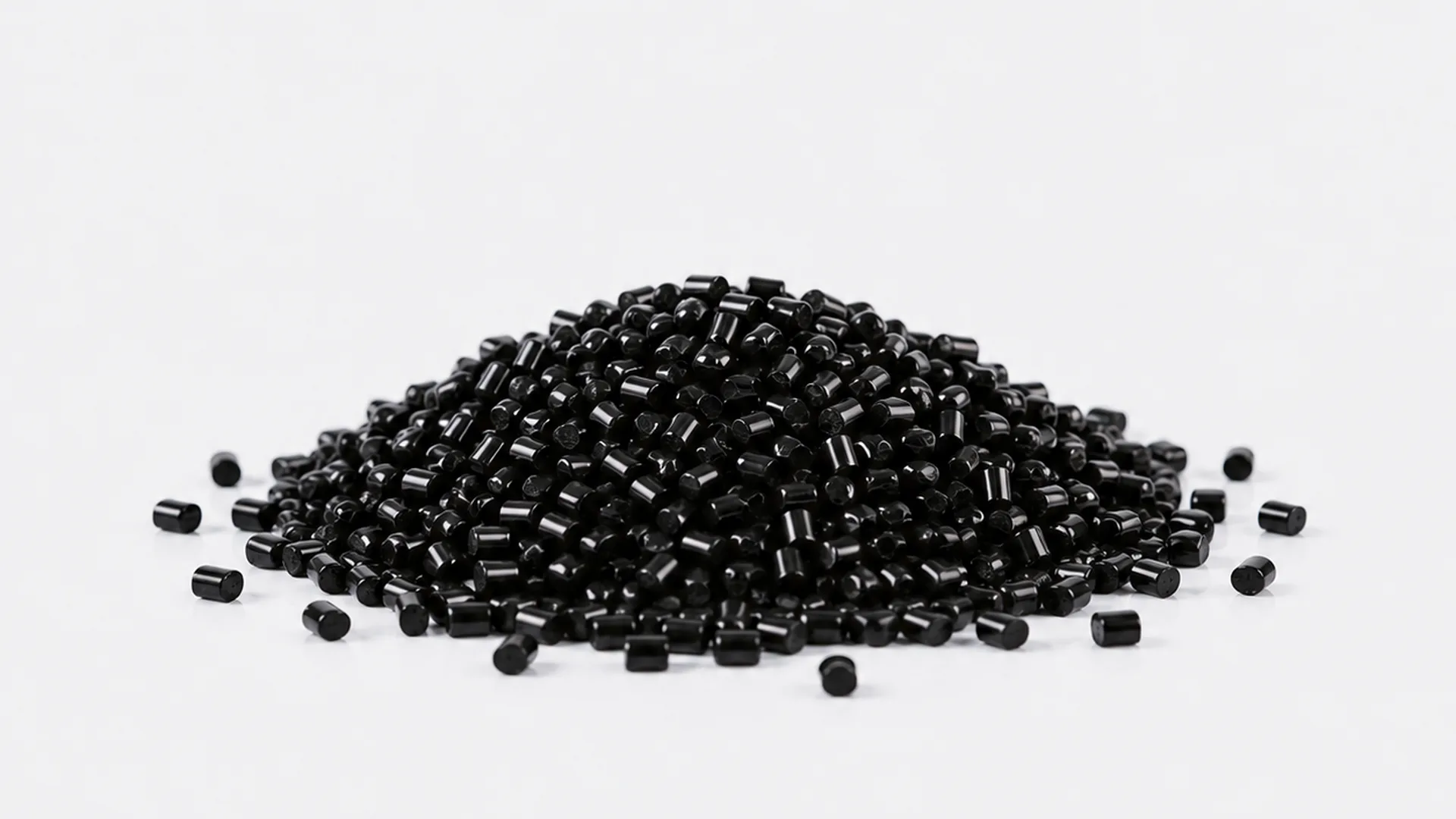
Hạt sơ cấp là đơn vị cấu trúc nhỏ nhất của carbon đen. Kích thước của nó là đặc tính cơ bản nhất, và nó chi phối gần như mọi thứ khác về cách bột màu hành xử.
Theo Birla Carbon, một trong những nhà sản xuất carbon đen lớn nhất thế giới, kích thước hạt điển hình của carbon đen lò dao động từ khoảng 8 nanomet đến 100 nanomet [1]. Ở đầu kia, carbon đen quy trình nhiệt có hạt sơ cấp lớn hơn nhiều — trong khoảng 150 đến 500 nanomet — theo International Carbon Black Association (ICBA) [2].
Mối quan hệ giữa kích thước và độ đen là trực tiếp và được tư liệu hóa tốt: hạt mịn hơn tạo ra màu đen sâu hơn và cường độ nhuộm màu cao hơn [3]. Hạt nhỏ hơn có diện tích bề mặt cao hơn, làm tăng độ đen — nhưng đánh đổi là chúng khó phân tán hơn và làm tăng độ nhớt của khối nóng chảy, đòi hỏi nhiều năng lượng trộn hơn [1]. Đây chính là lý do masterbatch đen độ màu cao (xây trên bột màu rất mịn) đòi hỏi ép đùn lực cắt cao hai giai đoạn để phân tán đúng, trong khi loại thô hơn thì dễ chịu hơn.
Bột màu mịn, độ đen cao cũng có xu hướng dịch tông nền sang xanh lam, đó là lý do các ứng dụng đen sâu cao cấp — chi tiết trang trí ô tô, bao bì độ bóng cao, điện tử tiêu dùng — chỉ định chúng, trong khi loại thô hơn mang tông nền ngả nâu hơn [3].
Cấu trúc: cách khối kết tụ ảnh hưởng đến độ phân tán và độ dẫn điện
Ngoài kích thước hạt riêng lẻ, các hạt carbon đen hợp nhất thành những cụm phân nhánh dạng chuỗi gọi là khối kết tụ. Mức độ phân nhánh này gọi là *cấu trúc*, và đó là đặc tính chính thứ hai.
Cấu trúc được đo bằng chỉ số hấp thụ dầu (OAN), xác định theo ASTM D2414 — thể tích dầu mà một khối lượng carbon đen nhất định có thể hấp thụ, báo cáo bằng mL/100g [4]. Cấu trúc cao hơn nghĩa là phân nhánh nhiều hơn, ảnh hưởng đến hai điều mà người mua masterbatch quan tâm:
- Phân tán và độ nhớt. Loại cấu trúc cao hơn tạo độ nhớt nhanh hơn và có thể mang nhiều bột màu hơn, nhưng cần năng lượng trộn đủ để bẻ nhỏ và phân bố đều.
- Độ dẫn điện. Với masterbatch dẫn điện và chống tĩnh điện, carbon đen cấu trúc cao là thiết yếu — các khối kết tụ phân nhánh tạo thành "mạng thẩm thấu" nối liền dẫn dòng điện. Loại dẫn điện cấu trúc cao có thể dựng mạng dẫn điện ở mức tải tương đối thấp [5].
Đó là lý do masterbatch dẫn điện và masterbatch độ đen cao dùng carbon đen khác nhau về cơ bản, dù cả hai đều "đen".
Diện tích bề mặt và các tiêu chuẩn đo lường nó
Diện tích bề mặt bám sát kích thước hạt — hạt nhỏ hơn nghĩa là diện tích bề mặt cao hơn — và tương quan với độ đen, độ dẫn điện, khả năng chịu thời tiết và độ nhớt [1]. Vì nó rất trọng tâm, tồn tại nhiều phép thử chuẩn hóa để định lượng nó, và một nhà cung cấp nghiêm túc có thể cho bạn biết dữ liệu của họ đến từ phương pháp nào:
- Chỉ số hấp phụ iốt — ASTM D1510, một phép đo phổ biến liên quan đến diện tích bề mặt [4].
- Hấp phụ nitơ BET — phương pháp tham chiếu cho diện tích bề mặt riêng, báo cáo bằng m²/g [4].
- Phân bố kích thước hạt — ASTM D3849, định lượng trực tiếp kích thước hạt sơ cấp [3].
Điểm thực tế cho người mua: một tờ dữ liệu liệt kê giá trị thử nghiệm thực đối chiếu với các phương pháp ASTM có tên là dấu hiệu của kiểm soát quy trình thực. Dữ liệu diện tích bề mặt mơ hồ hoặc thiếu là dấu hiệu để hỏi thêm.
Cách carbon đen được phân loại: ASTM D1765
Hệ thống phân loại được dùng rộng rãi nhất cho carbon đen cấp cao su là ASTM D1765, gán cho mỗi loại một mã bốn ký tự [6]. Hiểu logic giúp giải mã tên loại bạn sẽ thấy khắp ngành:
- Ký tự đầu tiên — "N" hoặc "S" — chỉ ảnh hưởng đến tốc độ lưu hóa, trong đó N biểu thị carbon lưu hóa bình thường và S lưu hóa chậm [6].
- Ký tự thứ hai (một chữ số) chỉ nhóm diện tích bề mặt trung bình — mà, như đã thấy, bám theo kích thước hạt [6].
- Hai chữ số cuối được gán một cách tùy ý [6].
Vậy khi bạn thấy ký hiệu như N110 so với N550, chữ số nhóm giúp bạn phân biệt loại mịn hơn, diện tích bề mặt cao hơn (N110) khỏi loại thô hơn (N550). Dù hệ thống này được phát triển cho cao su, cùng những nguyên tắc kích thước hạt và cấu trúc chuyển thẳng vào masterbatch nhựa.
Điều này nghĩa là gì khi chọn masterbatch đen
Ghép các nền tảng lại, đây là cách các đặc tính carbon đen ánh xạ tới điều bạn nên chỉ định:
| Nếu bạn cần… | Hãy tìm carbon đen mà… | Vì… |
|---|---|---|
| Độ đen tối đa / đen sâu | kích thước hạt mịn, diện tích bề mặt cao | hạt nhỏ hơn làm tăng độ đen và cường độ nhuộm màu |
| Tông nền xanh sạch | loại mịn độ màu cao | bột màu mịn dịch tông nền sang xanh lam |
| Dẫn điện / chống tĩnh điện | cấu trúc cao (OAN cao) | khối kết tụ phân nhánh tạo mạng dẫn điện |
| Phân tán dễ / tiết kiệm | kích thước hạt thô hơn | hạt lớn hơn phân tán với ít năng lượng hơn |
| Bảo vệ UV / thời tiết | mức tải đủ + phân tán mịn | carbon đen phân tán tốt chặn UV hiệu quả |
Điều rút ra: "carbon đen" không phải một vật liệu duy nhất. Khớp kích thước hạt và cấu trúc với ứng dụng của bạn — rồi phân tán nó đúng cách — là điều quyết định chi tiết thành phẩm của bạn có đạt mục tiêu độ đen, độ dẫn điện và độ bền hay không. Đó là lý do quy trình sản xuất phía sau một masterbatch quan trọng ngang với bột màu bên trong nó.
Câu hỏi thường gặp
Hàm lượng carbon đen cao hơn có luôn nghĩa là sản phẩm đen hơn không? Không hẳn. Vượt một điểm nhất định, độ đen được chi phối bởi kích thước hạt và chất lượng phân tán nhiều hơn là lượng tải thô. Một loại hạt mịn phân tán tốt ở tỷ lệ vừa phải có thể trông đen hơn một loại thô phân tán kém ở tỷ lệ cao hơn. Đó là lý do việc chọn kích thước hạt và quy trình phân tán quan trọng cùng với hàm lượng carbon đen.
Khác biệt giữa kích thước hạt và cấu trúc là gì? Kích thước hạt chỉ đường kính của các hạt sơ cấp riêng lẻ của carbon đen. Cấu trúc chỉ cách các hạt đó hợp nhất thành khối kết tụ phân nhánh dạng chuỗi, đo bằng chỉ số hấp thụ dầu (OAN) theo ASTM D2414. Kích thước hạt chi phối độ đen trực tiếp nhất; cấu trúc chi phối hành vi phân tán và độ dẫn điện trực tiếp nhất. Cả hai đều quan trọng, và được chỉ định độc lập.
Carbon đen nào tốt nhất cho masterbatch dẫn điện hoặc chống tĩnh điện? Ứng dụng dẫn điện và chống tĩnh điện cần carbon đen cấu trúc cao, vì các khối kết tụ phân nhánh tạo thành mạng nối liền dẫn dòng điện. Loại dẫn điện cấu trúc cao có thể thiết lập mạng này ở mức tải tương đối thấp. Đây là yêu cầu khác về cơ bản so với bột màu độ đen cao, vốn ưu tiên kích thước hạt mịn thay vào đó.
Vì sao hai masterbatch cùng phần trăm carbon đen lại trông khác nhau? Vì chúng có thể dùng loại carbon đen khác nhau — kích thước hạt, cấu trúc và diện tích bề mặt khác nhau — và có thể được phân tán ở mức độ khác nhau. Hai loại ở cùng mức tải có thể khác nhau về độ đen, tông nền và độ che phủ. Đó là lý do so sánh masterbatch nghĩa là nhìn vượt qua phần trăm carbon đen công bố để tới các đặc tính bột màu thực và chất lượng phân tán.
Chỉ định đúng loại cho ứng dụng của bạn
Đội kỹ thuật của chúng tôi khớp loại carbon đen, nhựa nền và quy trình phân tán với yêu cầu độ đen, độ dẫn điện và gia công của bạn. Duyệt toàn bộ dải sản phẩm masterbatch, hoặc yêu cầu TDS và mẫu để thử đúng loại trên chuyền của bạn. Mới với nền tảng? Bắt đầu với masterbatch đen là gì và được làm ra sao, hoặc học cách chọn nhà cung cấp đáng tin cậy.
---
Tài liệu tham khảo / Nguồn
[1] Birla Carbon, "What is Carbon Black? — Carbon Black 101." birlacarbon.com [2] International Carbon Black Association (ICBA), tờ thông tin "Particle Properties of Carbon Black". [3] Bối cảnh kích thước hạt ASTM D3849; mối quan hệ giữa kích thước hạt carbon đen và độ đen, tài liệu kỹ thuật ngành (SpecialChem, Infinita Lab). [4] ASTM D2414 (chỉ số hấp thụ dầu / cấu trúc), ASTM D1510 (chỉ số hấp phụ iốt), phương pháp diện tích bề mặt bằng hấp phụ nitơ BET. [5] Thẩm thấu và mức tải của carbon đen dẫn điện, tài liệu kỹ thuật ngành. [6] ASTM D1765, "Standard Classification System for Carbon Blacks Used in Rubber Products", ASTM International.
*Lưu ý: các số tiêu chuẩn và khoảng giá trị ở trên phản ánh tài liệu ngành đã công bố và các cơ quan tiêu chuẩn; chúng mô tả carbon đen nói chung, không phải bất kỳ loại sản phẩm ZFH cụ thể nào. Để biết thông số chính xác của một loại masterbatch ZFH, hãy yêu cầu TDS sản phẩm.*
---