Cara membaca nomor N ASTM karbon hitam (N220, N330, N550) — dan mengapa penting untuk masterbatch
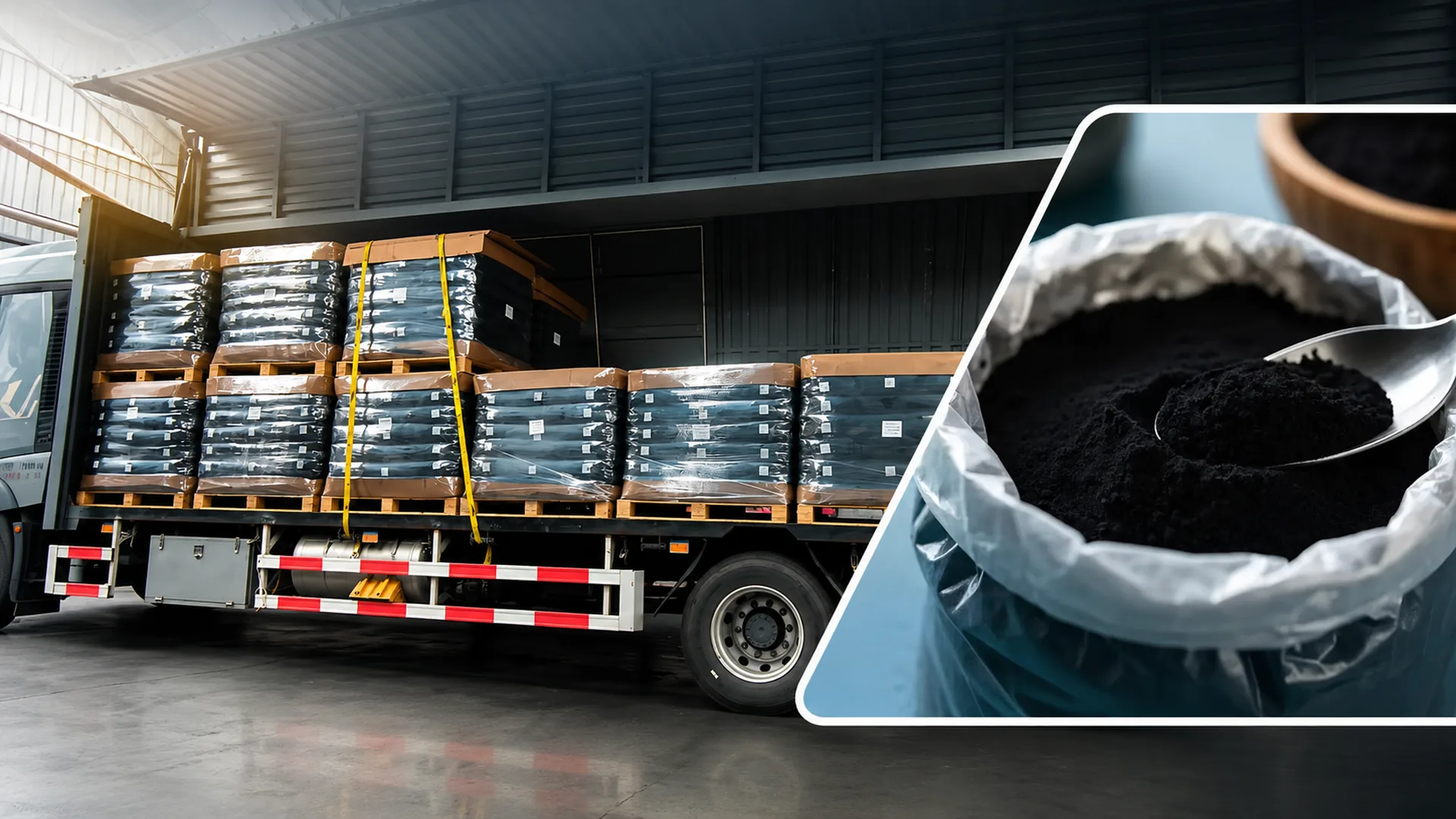
Buka hampir semua lembar data karbon hitam, Anda akan melihat kode seperti N220, N330, atau N660. Pembeli sering menganggapnya nama produk yang membingungkan, atau mengira angka itu peringkat mutu — makin tinggi makin baik. Keduanya tidak benar. Nomor N ASTM adalah klasifikasi ringkas yang memberi tahu hal-hal spesifik tentang karbon hitam dan, sama pentingnya, meninggalkan hal lain. Artikel ini membongkar tiap bagian angka, meluruskan mitos umum tentang dua digit terakhir, dan menjelaskan mengapa seluruh sistem berasal dari industri karet — serta apa artinya saat Anda membeli masterbatch hitam untuk plastik.
Jawaban singkat
Nomor N ASTM memiliki tiga bagian: sebuah huruf, digit pertama, dan dua digit lagi. Huruf (N atau S) menggambarkan bagaimana karbon hitam memengaruhi laju vulkanisasi karet. Digit pertama menempatkan karbon hitam ke dalam kelompok luas permukaan — dan karena luas permukaan dan ukuran partikel bergerak berlawanan arah, ia juga memberi tahu kira-kira seberapa halus partikelnya. Dua digit terakhir ditetapkan secara sembarang dan tidak punya makna sendiri. Yang penting, angka itu tidak mengatakan apa pun secara langsung tentang struktur (percabangan dan volume rongga agregat), yang harus Anda baca terpisah dari nilai penyerapan minyak. Klasifikasi ini berasal dari ASTM D1765, standar untuk karbon hitam yang dipakai dalam karet.
Huruf: N atau S
Karakter pertama adalah huruf, dan dalam praktik Anda hampir selalu melihat N. Ia merujuk pada pengaruh karbon hitam terhadap vulkanisasi: N menunjukkan laju vulkanisasi normal, sedangkan S menunjukkan laju lambat. Vulkanisasi lambat adalah ciri karbon hitam kanal dan karbon hitam yang teroksidasi di permukaan, karena gugus oksigen di permukaan partikel mengganggu kimia vulkanisasi. Bagi pembeli plastik, huruf ini sendiri tidak bermakna pemrosesan apa pun — tetapi ia pengingat berguna bahwa seluruh skema dibangun seputar perilaku vulkanisasi karet, bukan pewarnaan plastik.
Digit pertama: luas permukaan (dan karenanya ukuran partikel)
Inilah digit yang benar-benar membawa informasi. Menurut ASTM D1765, rentang luas permukaan nitrogen karbon hitam dibagi menjadi sepuluh kelompok, dan digit pertama menamai kelompok itu. Karena luas permukaan naik saat partikel mengecil, digit pertama rendah berarti partikel halus dan luas permukaan tinggi, sedangkan digit pertama tinggi berarti partikel kasar dan luas permukaan rendah. Dengan kata lain, karbon hitam N1xx termasuk yang terhalus, dan N9xx (termal) termasuk yang terkasar.
| Digit pertama | Kelompok luas permukaan nitrogen | Grade contoh |
|---|---|---|
| 0 | > 150 m²/g | karbon khusus luas tinggi |
| 1 | 121–150 m²/g | N110 (SAF), N115, N134 |
| 2 | 100–120 m²/g | N220 (ISAF), N234 |
| 3 | 70–99 m²/g | N326, N330 (HAF), N339 |
| 4 | 50–69 m²/g | karbon tungku di rentang ini |
| 5 | 40–49 m²/g | N539, N550 |
| 6 | 33–39 m²/g | N650, N660, N683 |
| 7 | 21–32 m²/g | N762, N774 |
| 8 | 11–20 m²/g | karbon tungku kasar |
| 9 | 0–10 m²/g | N990, N991 (karbon termal) |
Batas kelompok luas permukaan pada tabel ini adalah rentang persis yang didefinisikan dalam ASTM D1765; nama grade ditampilkan sebagai orientasi, dengan nilai luas permukaan nitrogen tipikal yang diambil dari data teknis produsen karbon hitam.
Luas permukaan penting karena, untuk jumlah karbon hitam yang sama, partikel yang lebih halus memberi kehitaman lebih dalam (jetness), kekuatan pewarnaan lebih tinggi, dan perlindungan UV lebih baik — tetapi juga lebih sulit didispersikan dan cenderung menaikkan viskositas. Kompromi itulah inti pemilihan karbon.
Dua digit terakhir ditetapkan secara sembarang
Inilah poin yang mengejutkan banyak pembeli. Keyakinan yang tersebar luas adalah dua digit terakhir mengodekan struktur — sehingga, katakanlah, N330 dan N375 berbeda dengan cara yang terkode dan terbaca. Dalam standarnya sendiri, tidak begitu: setelah digit pertama, dua digit sisanya ditetapkan secara sembarang oleh komite ASTM. Keduanya berfungsi sebagai nomor identifikasi dalam satu kelompok luas permukaan, bukan formula yang bisa Anda pecahkan. Dua grade dengan digit pertama sama berbagi kelas luas permukaan, tetapi Anda tidak bisa memeringkat struktur atau kinerjanya hanya dengan membaca dua digit terakhir. Untuk itu, Anda harus melihat sifat yang terukur.
Yang tidak diberitahukan angka: struktur
Sifat terpenting yang dihilangkan nomor N adalah struktur — seberapa jauh partikel primer menyatu dan bercabang menjadi agregat terbuka bervolume rongga tinggi. Struktur diukur terpisah lewat penyerapan minyak (angka OAN atau DBP, ASTM D2414). Karbon berstruktur tinggi membangun viskositas dan konduktivitas serta lebih mudah didispersikan; yang berstruktur rendah mengemas lebih padat dan mencapai kilap dan kehitaman lebih tinggi. Dua karbon dalam kelompok luas permukaan yang sama bisa berstruktur cukup berbeda, sehingga spesifikasi yang serius selalu memasangkan nomor N (atau grade dagang) dengan nilai OAN/DBP, luas permukaan nitrogen (ASTM D6556 atau angka iodin, D1510), dan sering kekuatan pewarnaan (D3265). Nomor N adalah label awal, bukan sidik jari lengkap.
Ini sistem untuk karet — apa yang harus dibaca pembeli plastik
ASTM D1765, sesuai judulnya sendiri, adalah klasifikasi karbon hitam yang dipakai dalam produk karet, dan menamai lebih dari empat puluh grade karet terstandar dari seri N100 hingga N900. Grade-grade itu dirancang untuk memperkuat ban dan karet industri, di mana luas permukaan dan struktur menentukan ketahanan abrasi dan modulus. Warna dan jetness tidak pernah jadi tujuannya.
Karbon hitam yang dipakai membuat masterbatch hitam untuk plastik adalah dunia lain. Karbon hitam pigmen ber-jetness tinggi umumnya lebih halus daripada kebanyakan grade penguat karet, dan biasanya diidentifikasi lewat grade dagang produsen alih-alih nomor N. Yang terbawa adalah fisika dasarnya: entah Anda membaca nomor N atau grade pigmen dagang, sifat yang menentukan kinerja sama saja — ukuran partikel, luas permukaan, struktur (OAN), kimia permukaan, dan seberapa baik karbon terdispersi. Jadi jika pemasok plastik menyebut nomor N, perlakukan sebagai petunjuk luas permukaan, lalu minta parameter yang benar-benar mengatur masterbatch hitam: ukuran partikel, OAN/struktur, dan kualitas dispersi.
Bagaimana ini terkait dengan masterbatch Anda
Membaca angka dengan benar berubah menjadi keputusan praktis. Jika Anda butuh jetness dan perlindungan UV maksimum — jaket kabel, film pertanian, komponen tampilan tinggi — Anda mengarah ke karbon yang lebih halus dan berluas permukaan tinggi, dan dispersi menjadi faktor penentu, karena karbon halus justru yang paling menolak didispersikan. Jika Anda butuh opasitas ekonomis pada penampang lebih tebal, karbon yang lebih kasar pada dosis yang masuk akal bisa lebih bernilai. Pembuat masterbatch yang mumpuni memilih grade karbon hitam sesuai tugas lalu mencampurnya agar karbon halus yang sulit didispersikan tetap terencerkan bersih di lini Anda.
ZFH memilih karbon hitamnya berdasarkan aplikasi — grade pigmen lebih halus di mana jetness dan ketahanan cuaca penting, diseimbangkan dengan keterdispersian — dan memperlakukan dispersi sebagai atribut mutu yang terkendali, bukan sekadar pikiran belakangan.
Pertanyaan yang sering diajukan
Apakah nomor N yang lebih tinggi berarti karbon hitam yang lebih baik?
Tidak. Angka itu klasifikasi, bukan skor mutu. Digit pertama yang lebih tinggi hanya berarti luas permukaan lebih rendah dan partikel lebih kasar. "Lebih baik" sepenuhnya bergantung pada aplikasi.
Bisakah saya membandingkan dua grade hanya dari nomor N-nya?
Hanya sebagian. Grade dengan digit pertama sama berbagi kelas luas permukaan, tetapi dua digit terakhir sembarang dan struktur sama sekali tidak dikodekan. Bandingkan OAN/DBP terukur, luas permukaan, dan dispersi sebagai gantinya.
Pemasok masterbatch saya tidak menyebut nomor N. Apakah itu masalah?
Sama sekali tidak — untuk plastik itu normal. Karbon pigmen untuk masterbatch biasanya diidentifikasi lewat grade dagang. Mintalah ukuran partikel, luas permukaan, struktur (OAN), dan hasil dispersi seperti nilai tekanan filter.
Sumber
Kerangka klasifikasi dan batas kelompok luas permukaan dalam artikel ini didefinisikan dalam ASTM D1765, Standard Classification System for Carbon Blacks Used in Rubber Products, yang juga menetapkan penunjukan huruf, digit luas permukaan, dan dua digit terakhir yang ditetapkan sembarang. Metode karakterisasi terkait yang disebut adalah: struktur lewat angka penyerapan minyak, ASTM D2414 (OAN/DBP); luas permukaan nitrogen, ASTM D6556 (N2SA); angka adsorpsi iodin, ASTM D1510; dan kekuatan pewarnaan, ASTM D3265. Angka luas permukaan nitrogen representatif untuk grade bernama (misalnya N220 ≈ 114 m²/g, N326 ≈ 78 m²/g, N660 ≈ 35 m²/g, N990 ≈ 8 m²/g) adalah nilai tipikal yang diterbitkan dalam lembar data teknis produsen karbon hitam dan sedikit berbeda antarprodusen.
Nomor N adalah petunjuk berguna, tetapi masterbatch hitam ditentukan oleh seberapa baik karbon hitam terdispersi dan cocok dengan resin Anda. Untuk membandingkan grade berdasarkan hal yang benar-benar penting di lini Anda, lihat masterbatch hitam standar PE/EVA dan masterbatch hitam warna tinggi dari ZFH, atau tanyakan bagaimana kami mengarakterisasi dan mendispersikan karbon hitam kami di halaman mutu dan kepatuhan.